
Before you give up on buying your first home, read this
If you're hoping to buy your first home someday, there's a good chance you've felt like the goal posts keep moving.
You save some money. Home prices go up. You save some more. Interest rates go up. You finally feel like you're making progress, and then another headline comes out telling you how impossible homeownership has become.
Trust me, I get it.
But before you write off the idea of buying a home entirely, it may be worth taking a fresh look at where things stand today. Recent reports from CREA, CMHC, and OREA suggest that many Ontario markets remain below their pandemic peak prices while inventory levels have improved, giving buyers more options and, in many cases, more negotiating power than they've had in years.
The Biggest Hurdle Isn't Always the Mortgage Payment
When people talk about affordability, the conversation often focuses on interest rates. And don't get me wrong, higher rates absolutely affect how much you can qualify for.
But in my experience, one of the biggest obstacles for first-time buyers isn't actually the monthly payment. Often, they're already paying some pretty extreme rent.
For years, home prices were climbing so quickly that many buyers felt like they were running on a treadmill. Every time they saved another $10,000, the home they wanted seemed to increase by $20,000. Today, many Ontario markets look a little different. While nobody would call housing "cheap," prices in many areas remain below the peaks we saw during the pandemic housing boom.
A lower purchase price doesn't just mean a smaller mortgage. It can also mean a smaller down payment requirement. I know... thanks Captain Obvious, right? Still, some buyers may not realize just how much of a difference that can make.
A Simple Example
Let's use a simplified example.
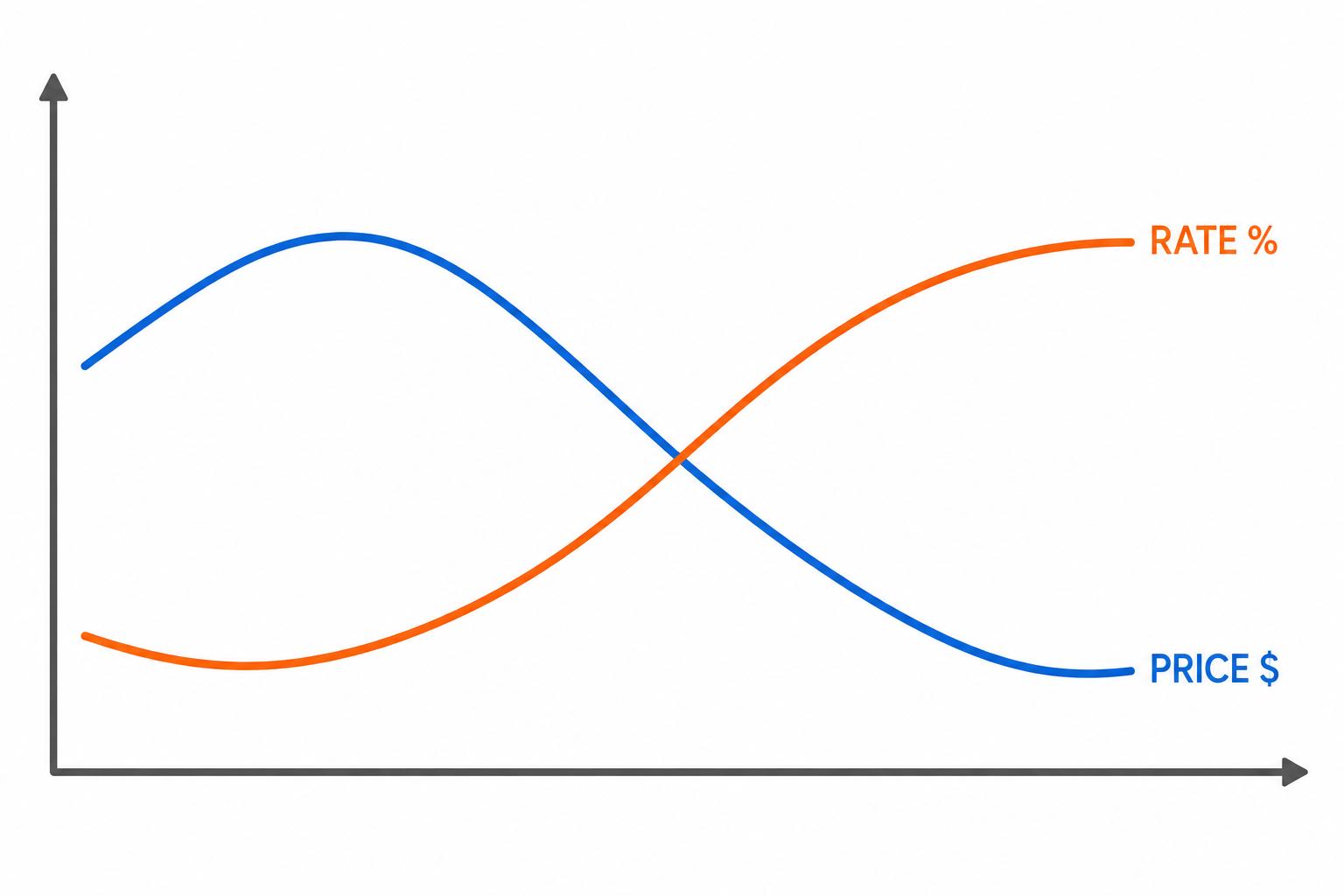
Imagine a home that sold for $1,000,000 in early 2022 when mortgage rates were around 2.5%. Today, that same home might be selling closer to $850,000 while mortgage rates are around 4.4%.
At 20% down:
A $1,000,000 purchase required $200,000 down.
An $850,000 purchase requires $170,000 down.
In this example, despite rates being nearly two percentage points higher, the monthly payment is only about $150 more per month because the purchase price is significantly lower. Meanwhile, the buyer needs $30,000 less for the down payment.
No, that doesn't magically solve affordability. But for many buyers, saving an additional $30,000 can take years. If you've spent the last few years diligently building your savings, you may be closer than you think.
What About Interest Rates?
This is where many buyers get stuck. They're waiting for rates to come down. Maybe they will, maybe they won't. The truth is nobody knows for sure.
What we do know is that today's market offers some advantages that didn't exist a few years ago. There is generally more inventory available, buyers often have more negotiating power, conditions are back, and there is usually far less pressure to make rushed decisions.
If rates fall significantly, that may help affordability. But it may also bring more buyers back into the market, increasing competition and potentially putting upward pressure on prices again.
Don't Forget About First-Time Buyer Programs
There are also several programs available that many buyers overlook.
Depending on your situation, these may include:
The First Home Savings Account (FHSA)
The Home Buyers' Plan (RRSP withdrawal program)
Ontario Land Transfer Tax rebates for first-time buyers
New-build GST/HST rebates in qualifying situations
When combined, these programs can make a bigger difference than many people realize.
Are You Closer Than You Think?
Maybe. Maybe not. The point is that many aspiring homeowners are relying on assumptions that may no longer reflect today's market.
The only way to know where you stand is to run the numbers. You may discover you're still a ways off, or you may discover that buying your first home is closer than you thought.
Either way, having a plan is usually better than wondering.
Data referenced in this article was obtained from CMHC, OREA and CREA reports.
