
Can you refinance if your home has dropped in value?
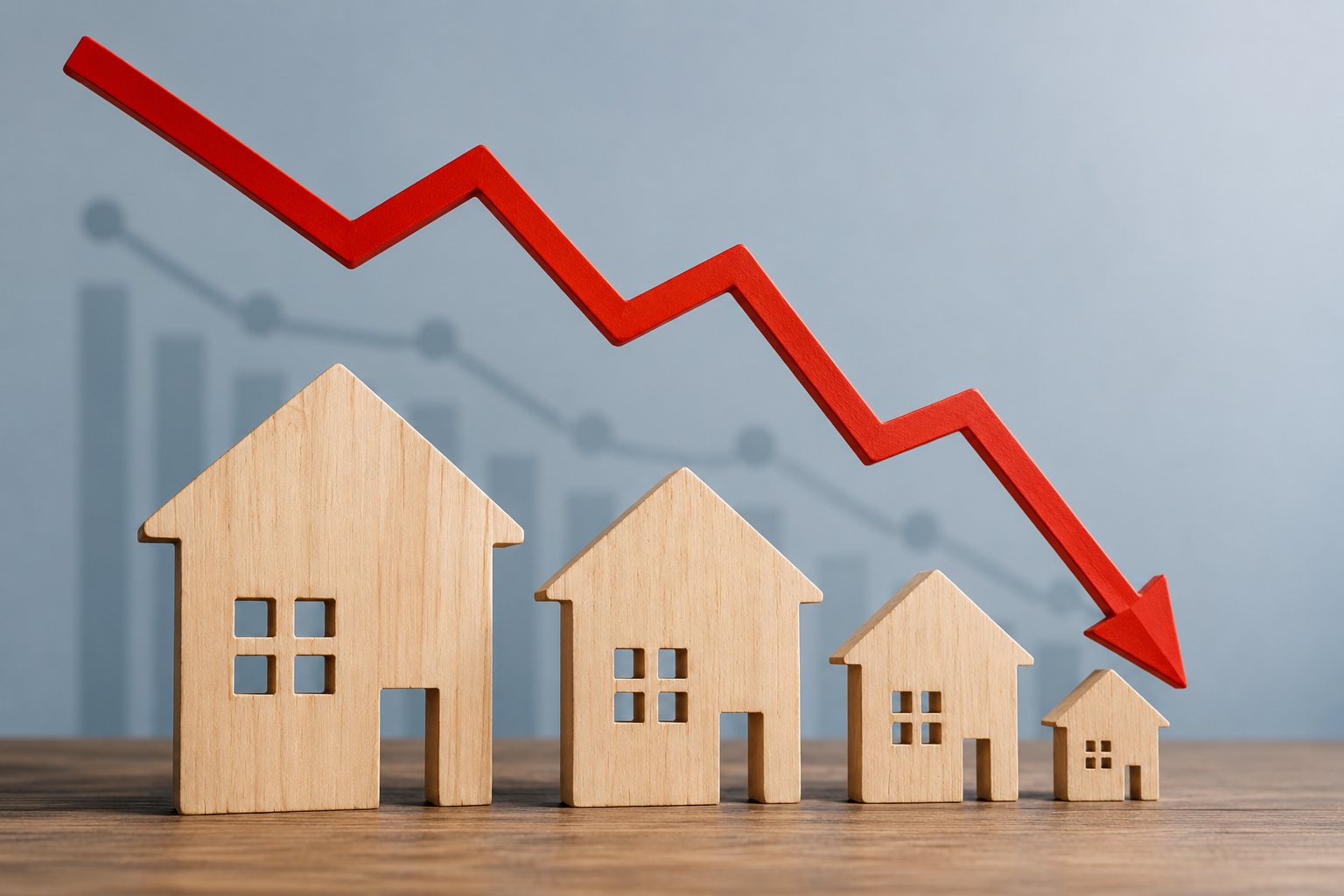
Over the last couple of years, we've watched the Canadian housing market go through a significant correction. At the same time, many Canadians have been dealing with higher interest rates, rising everyday costs, and an overall feeling that life has simply become more expensive.
For many homeowners, refinancing has been one way to help navigate those challenges, whether that's consolidating debt, reducing monthly payments, or accessing equity for renovations or other major expenses.
But what happens when your home's value isn't what it used to be? Does it affect your ability to refinance? Could it make switching lenders more difficult? Or is it mostly just media noise? The truth is, it depends.
A lower home value can certainly affect your refinancing options, but it's far from the only thing lenders look at. The good news is that refinancing and switching lenders aren't always treated the same way, which means a drop in home value doesn't necessarily affect both options equally. Let's take a look at why.
Equity Still Matters
When you refinance, lenders are looking at today's value of your home, not what you originally paid for it.
Let's say your home was worth $900,000 two years ago but is now worth $800,000. Most lenders will allow you to refinance up to 80% of your home's current value, which in this example would be $640,000. If your mortgage balance is only $420,000, you've still got plenty of equity and the change in value may not affect your plans very much.
If, however, your mortgage balance is already around $640,000 and you're hoping to borrow even more, there may simply not be enough equity to complete the refinance you're hoping for.
If your equity has been affected more significantly, don't assume you've run out of options just yet. Home value is only one piece of the puzzle, and as we'll discuss below, there may still be other paths worth exploring.
It's Not Just About Your Home's Value
This is probably the biggest misconception I see.
Some homeowners assume that if they have enough equity, refinancing is a sure thing. Unfortunately, that's not always the case. Lenders are also looking at whether you can comfortably afford the new mortgage today.
Maybe you've taken on a vehicle loan since buying your home. Maybe interest rates have increased your monthly obligations. Maybe your income has changed, or perhaps you've become self-employed. All of those things can affect your debt service ratios and ultimately whether you qualify.
It's also worth remembering that refinancing isn't always about borrowing more money. Some homeowners refinance to extend their amortization and reduce their monthly payments. Others refinance to consolidate debt or fund renovations. Your options will depend not only on your home's value, but also on what you're trying to accomplish.
In other words, two homeowners with identical homes and identical equity could receive very different results simply because their financial situations have changed.
Are There Other Options?
Not every homeowner has the same goals. Maybe you're looking to consolidate debt. Maybe you want to lower your monthly payments. Perhaps you need funds for a renovation, or you're simply trying to create a little more financial breathing room.
If debt consolidation is one of your goals, I've written a separate article that explores when refinancing your mortgage may make sense, and when it may not.
Related: Should I Refinance My Mortgage to Pay Off Debt?
If a traditional refinance isn't the right fit, it doesn't always mean you've run out of options. Sometimes borrowing a little less is enough to make the numbers work. Other times, it may simply make sense to wait until you've built up more equity.
Depending on your situation, a second mortgagecould also be worth considering. This is generally more applicable when your home has plenty of equity, but qualifying for a larger first mortgage has become difficult because of your income or debt service ratios. Instead of replacing your existing mortgage, a second mortgage allows you to access some of your equity while leaving your first mortgage in place.
For some homeowners later in life, a reverse mortgage may also be an option. While it's certainly not the right solution for everyone, it can provide access to home equity without requiring monthly mortgage payments, making it worth exploring in the right circumstances.
The key takeaway is that there isn't always just one solution. The best path forward depends on both your financial situation and what you're hoping to achieve.
What If I'm Just Switching My Mortgage?
This is something that surprises a lot of homeowners.
If your mortgage is insured and you're simply switching lenders at renewal (not increasing your mortgage amount) you may have more flexibility than you think. In many cases, a straight insured switch doesn't require a new appraisal, meaning today's home value may not even become part of the conversation. Every lender has their own policies, but it's worth knowing that refinancing and switching aren't always treated the same way.
Related: Should I Break My Mortgage Early?
Final Thoughts
A lower home value doesn't automatically mean refinancing is off the table. Your equity certainly matters, but so do your income, your debts, and what you're actually hoping to accomplish. If you've been assuming refinancing isn't an option simply because you've heard the market has softened, it may be worth taking a closer look. You might have more options than you think.
Common Questions
-
Potentially, yes. What matters most is your current equity, your financial situation, and whether you meet the lender's qualification requirements.
-
Often, yes. If you're completing a straight insured switch at renewal, many lenders don't require a new appraisal. That means your current home value may not affect the process in the same way it would for a refinance.
-
Not always. Some lenders use automated valuation models, while others require a full appraisal depending on the property and the type of transaction.
